Sizing and Room Fit
Sizing and Room Fit for office bookcase planning
A focused support article about how height, width, depth, and walkway clearance decide whether an office bookcase works, using a simple article layout that points back to the main guide.
Why sizing and room fit needs its own check
This supporting note focuses on how height, width, depth, and walkway clearance decide whether an office bookcase works. Office bookcases work best when one practical issue is solved at a time instead of letting style decide everything.
Start with the workday
An office bookcase looks simple until it starts doing real work. It may need to hold binders, reference books, paper trays, a printer, storage boxes, framed pieces, and the small objects that make a workspace feel less temporary. The useful choice is not just the tallest shelf or the prettiest finish. It is the bookcase that fits the room, carries the load, and still looks calm during a busy week.
Measure the room honestly
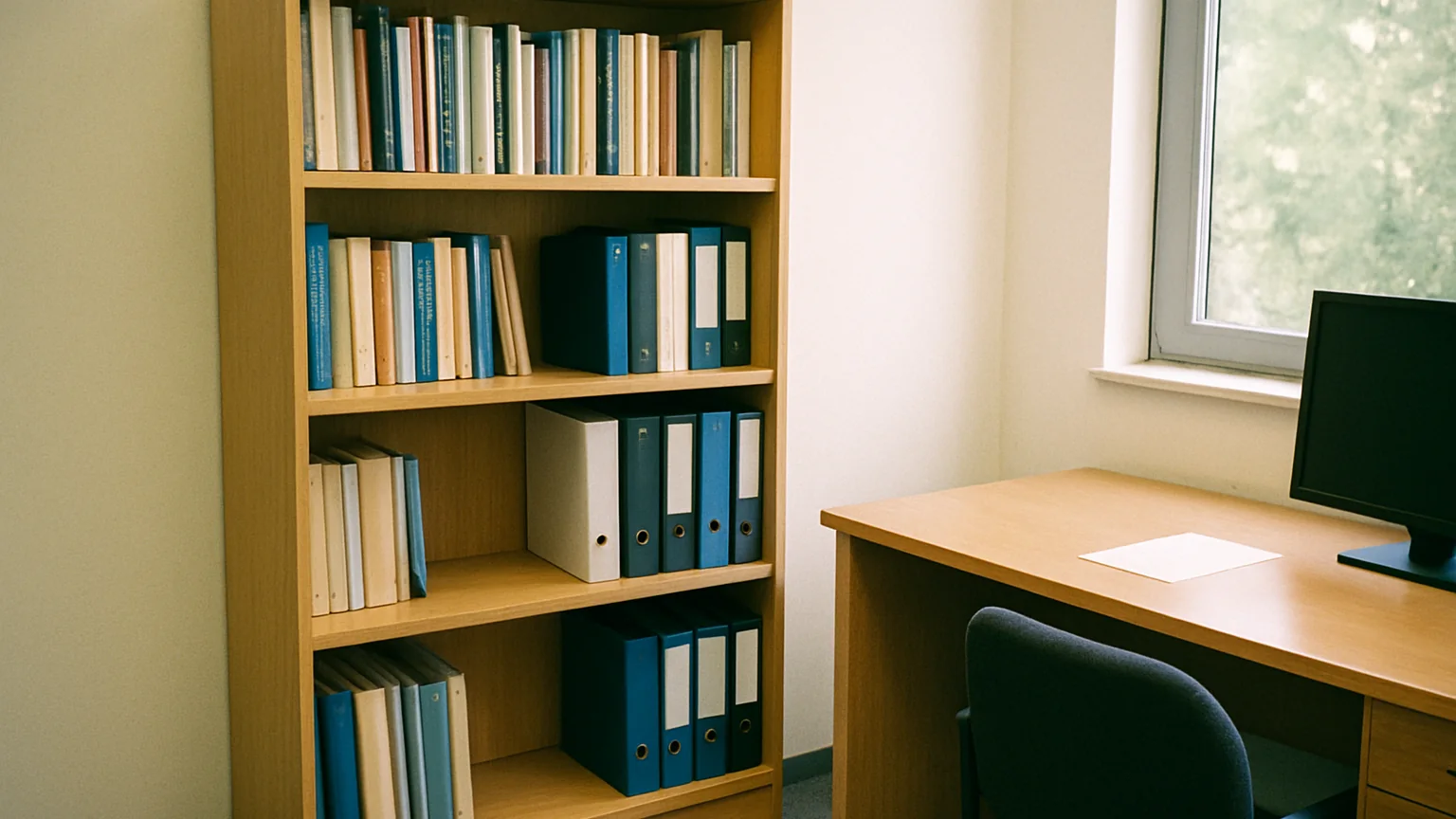
I like to judge office bookcases from the floor upward. Start with the wall space, walkway clearance, door swing, and nearby desk chair movement. Then look at shelf depth. A shallow bookcase can look tidy but may not hold binders or archive boxes. A deep bookcase can store more, but it may crowd the room or create dark pockets where supplies disappear.
Respect shelf weight
Shelf strength matters because office storage is heavier than decorative storage. A row of manuals, notebooks, files, and catalogs can bend a weak shelf faster than expected. Adjustable shelves are useful, but only when the pins, side panels, and shelf material feel strong enough for the real load. Heavy items belong lower so the unit feels stable and the room feels grounded.
Decide what should stay visible
Open shelves and closed storage serve different moods. Open shelves make reference items easy to grab and can show a professional display. Doors, baskets, or bins hide cables, spare paper, and awkward supplies. Most offices need a mix: a few visible shelves for daily materials and some concealed storage for the clutter that does not need to be part of the room’s visual story.
Let the bookcase reset the room
The best office bookcase supports both work and presentation. It should make a room easier to reset at the end of the day, not just provide another surface to fill. When the bookcase has the right proportions, the desk feels less crowded, the wall feels useful, and the office gains storage without losing calm.
Practical checklist
- List what the shelf must hold before choosing the finish.
- Measure wall, walkway, and chair clearance.
- Keep heavy objects low and check shelf strength.
- Choose open shelves only for items that deserve to stay visible.
- Return to the main guide after this one issue is clear.
How this connects
Use this page as a narrow filter, then return to the main office bookcase guide for the complete storage and display framework.
A bookcase should make the office easier to reset. If it only adds more visible surfaces for clutter, the room may need closed storage, fewer display objects, or a smaller unit with stronger shelves.
FAQ
Should this be checked before buying?
Yes. Storage needs and room clearance should be clear before style leads the decision.
Can one bookcase handle both display and supplies?
Often yes, especially when open shelves are balanced with baskets, boxes, doors, or lower storage.
What should go on lower shelves?
Heavier books, binders, boxes, or equipment should usually sit lower for stability.
Can this work in a small office?
Yes, if the footprint, depth, and chair path are measured honestly.
What is the safest default?
Choose a stable unit with clear assembly guidance and anchoring where appropriate.